Brooks, originally a family-owned and operated Australian company established in 1973, was acquired by the Irish-based company Ei Electronics in late 2022. With a wealth of industry knowledge and experience, we remain committed to providing quality, reliable products to safeguard you and your family.
- 28 Apr 2026
Are your smoke alarms compliant?
From 1 May 2026, the National Construction Code (NCC) introduces updates to Australian compliance requirements for smoke alarms.
What is Changing?
Adoption of AS 3786:2023 (superseding AS 3786:2014)
AS 3786 is the Australian product standard for Photoelectric smoke alarms. It defines how smoke alarms must be constructed, tested, and marked before they can be supplied for use in buildings.
The 2023 edition introduces additional clarity and requirements, including:
- Radio-linked alarms
- Temporary hush or silencing functions
- Updated installation and placement considerations
- Enhanced documentation and product information requirements.
- Formal recognition of multi-sensor smoke alarm technologies
Variable state adoption dates for AS 3786:2023
While AS 3786:2023 is referenced by the NCC from 1 May 2026, legal adoption and enforcement vary by state / territory and NCC updates.
Governments across jurisdictions advised of their respective adoption dates of the 2025 NCC and this will occur as follows:
- From 1 May 2026 in the Australian Capital Territory, Victoria, Tasmania, Northern Territory and Western Australia
- From 1 May 2027 in Queensland, New South Wales and South Australia.
Builders, specifiers, and property owners should always check state‑based regulations to confirm which version of the standard applies at the time of installation or approval.
Introduction of Multi-Sensor Devices to AS 3786:2013
As residential fire safety standards continue to evolve, multi‑sensor smoke alarms are becoming more common and are now clearly defined under AS 3786:2023.
Typical sensor combinations include:
- Smoke & Heat
- Heat & Carbon Monoxide
- Smoke & Carbon Monoxide
These Multi-Sensor Devices can function in two ways:
- As a Combination Alarm, or
- As a Multi-Criteria Alarm
Let’s break these two down:
A Combination Smoke Alarm contains more than one type of sensor inside a single alarm unit. Each sensor operates independently so if any one sensor detects a fire-related condition, the alarm can activate.
Whereas a Multi-Criteria Alarm also contains multiple sensors in one unit, however, the alarm only activates when the combined information from all sensor inputs matches a fire pattern.
Don’t forget the 10-Year Replacement Rule.
Regardless of technology type, smoke alarms must be replaced after 10 years in accordance with Australian Standards to ensure continued performance and reliability.
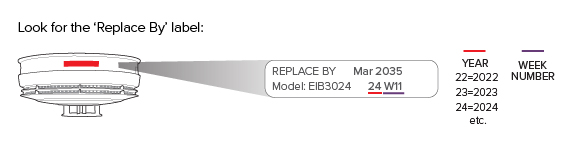
For Brooks Alarms, you can find the ‘replace by’ date on the curved edge of the alarm near the base plate; as well as on the underside of the alarm head.
We've got your safety covered